
最短路
注
求从某个源点到其余各点的最短路径 — Dijkstra算法 每一对顶点之间的最短路径 — Floyd算法
单源最短路
正权边
Dijkstra Ⅰ
稠密图 邻接矩阵 S集合表示当前已确定最短距离的点
- 初始化距离
- 循环次,找到不在中距离集合最近的点,将加到集合中,用更新其他点的距离(到其他点距离能否更新其他点到的距离)
时间复杂度
空间复杂度
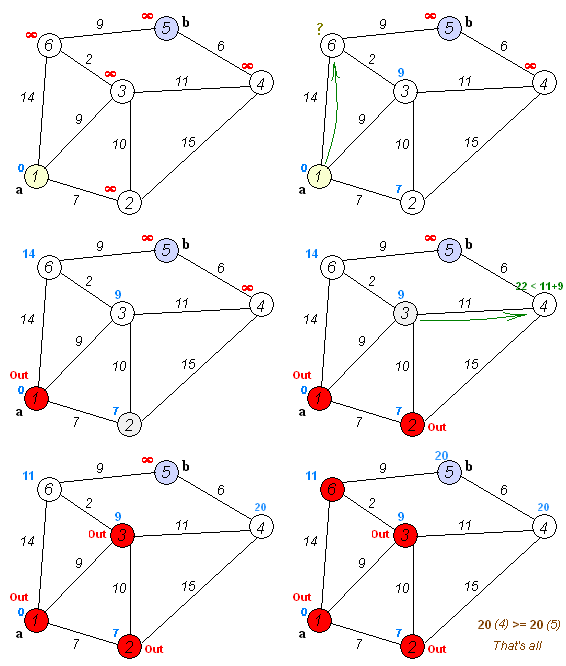
| 循环次数 | 1 | 2 | 3 | 4 | 5 | 6 |
|---|---|---|---|---|---|---|
| s | ||||||
| v |
C++
#include <bits/stdc++.h>
using namespace std;
const int N = 550;
int g[N][N];
int dist[N];
bool st[N];
int n, m;

int dijkstra()
{
    memset(dist, 0x3f, sizeof dist);
    dist[1] = 0;

    for(int i = 0; i < n; i ++)
    {
        int t = -1;
        for(int j = 1; j <= n; j ++)
        {
            if(!st[j] && (t == -1 || dist[t] > dist[j]))
            {
                t = j;
            }
        }
        st[t] = true;
        for(int j = 1; j <= n; j ++)
        {
            dist[j] = min(dist[j], dist[t] + g[t][j]);
        }
    }

    if(dist[n] == 0x3f3f3f3f) return -1;
    return dist[n];
}

int main()
{
    scanf("%d %d", &n, &m);
    memset(g, 0x3f, sizeof g);
    while(m --)
    {
        int a, b, c;
        scanf("%d %d %d", &a, &b, &c);
        g[a][b] = min(g[a][b], c);
    }
    printf("%d\n", dijkstra());

    return 0;
}
Dijkstra Ⅱ (堆优化)
稀疏图 邻接表
C++
#include <bits/stdc++.h>
using namespace std;
const int N = 1e6 + 10;
typedef pair<int, int> PII;

int n, m;
int h[N], w[N], e[N], ne[N], idx;
int dist[N];
bool st[N];

void add(int a, int b, int c)
{
    e[idx] = b, w[idx] = c, ne[idx] = h[a], h[a] = idx ++;
}

int dijkstra()
{
    memset(dist, 0x3f, sizeof dist);
    dist[1] = 0;
    priority_queue<PII, vector<PII>, greater<PII>> heap;
    heap.push({0, 1});

    while(heap.size())
    {
        auto t = heap.top();
        heap.pop();

        int ver = t.second, distance = t.first;
        if (st[ver]) continue;
        st[ver] = true;
        for(int i = h[ver]; i != -1; i = ne[i])
        {
            int  j = e[i];
            if(dist[j] > dist[ver] + w[i])
            {
                dist[j] = dist[ver] + w[i];
                heap.push({dist[j], j});
            }
        }
    }
    if (dist[n] == 0x3f3f3f3f) return -1;
    return dist[n];
}

int main()
{
    scanf("%d %d", &n, &m);
    memset(h, -1, sizeof h);
    while(m --)
    {
        int a, b, c;
        scanf("%d %d %d", &a, &b, &c);
        add(a, b, c);
    }
    printf("%d\n", dijkstra());
    return 0;
}